You bite into something hard and feel a crack. Or maybe you’ve been putting off dealing with a gap where a tooth came out years ago. Either way, you’re now sitting with a question that feels bigger than it should be: what do I actually do about this?
The number of tooth restoration options out there can make the whole thing feel like a maze. Fillings sound simple enough, but then someone mentions crowns, and then implants come up, and before you know it you’re reading about bone grafts at midnight wondering how you got here.
This guide breaks down the most common damaged tooth treatment options available in Kelowna and across British Columbia. Not as a medical textbook, but as a real conversation about what each treatment does, who it works for, what it costs, and how to figure out the right path forward with your dentist.
Good to know
What your dentist recommends depends on how much healthy tooth structure remains, where the damage sits in your mouth, and your overall oral health. Every situation looks different from the inside.
When a Tooth Is Damaged but Can Still Be Saved
A damaged tooth and a lost tooth are two very different starting points. When there’s still healthy structure to work with, your dentist has several ways to repair what’s there rather than pull it and start from scratch.
Small areas of decay are the most straightforward to treat. Your dentist removes the damaged portion and places a filling to seal the space. Composite fillings match your natural tooth colour, so the repair blends right in. Most people are back to eating normally within a few hours.
Larger damage needs more coverage. A dental crown fits over the entire visible part of the tooth, holding cracked or weakened structure together. Think of it as a protective cap that lets you chew and talk the way you did before the damage happened. People sometimes wonder whether composite or amalgam fillings are the better choice for their situation, and there are real differences worth knowing when it comes to tooth-coloured fillings compared with silver fillings depending on where the cavity sits and how large it is.
CEREC Same-Day Crowns
With a traditional crown, you visit once for preparation and impressions, wear a temporary for a couple of weeks, then come back to have the permanent one placed. CEREC skips that entire waiting period. A digital scanner maps your tooth, a milling machine in the office carves a ceramic crown on the spot, and you walk out the same day with the final restoration in your mouth.
At Discover Dental in Kelowna, patients considering this route usually want to know how durable a same-day ceramic crown really is before committing. That’s a fair question, and the short answer is that CEREC crowns hold up well over time with normal care.
Root Canal Therapy
When decay or a fracture reaches the nerve inside a tooth, two paths remain. Either the whole tooth comes out, or the infection is cleared and the tooth stays where it is. Root canal therapy takes the second path. Your dentist removes the infected tissue from inside the tooth, fills the empty space, and seals it. A crown then protects the tooth from future damage.
The reputation root canals carry is honestly outdated. With modern techniques and sedation, most people describe the experience as no worse than having a deep filling placed. The tooth stays in your jaw, keeps working, and you avoid the cost and complexity of replacing it down the road.
Worth asking
Before exploring replacement options, ask your dentist whether the damaged tooth can be repaired. Keeping a natural tooth in your mouth is almost always the preferred starting point when the structure allows it.
What Happens When a Tooth Cannot Be Saved
Not every tooth can be repaired. A crack running below the gumline, severe decay that has hollowed out most of the structure, or advanced gum disease loosening the root from the bone, these are the situations where the tooth needs to come out. Tooth extraction becomes the first step, and the question shifts from saving the tooth to deciding how to fill the space it leaves behind.
That gap matters more than most people realise at first. The teeth on either side will gradually drift toward the empty space, which changes how your bite lines up. The jawbone underneath begins to thin out because there’s no root stimulating it anymore. Chewing shifts to the other side of your mouth, putting extra load on teeth that weren’t designed to carry it. These are mechanical problems that compound over time, not cosmetic ones. Catching the early warning signs matters too, and knowing the symptoms of cracked tooth syndrome can make the difference between a repair and an extraction.
Same-day attention
A tooth knocked out or snapped off in an accident needs attention the same day. Reach out to an emergency dentist in Kelowna as soon as possible. Getting seen quickly opens up treatment paths that disappear within hours.
Comparing Your Missing Tooth Replacement Options
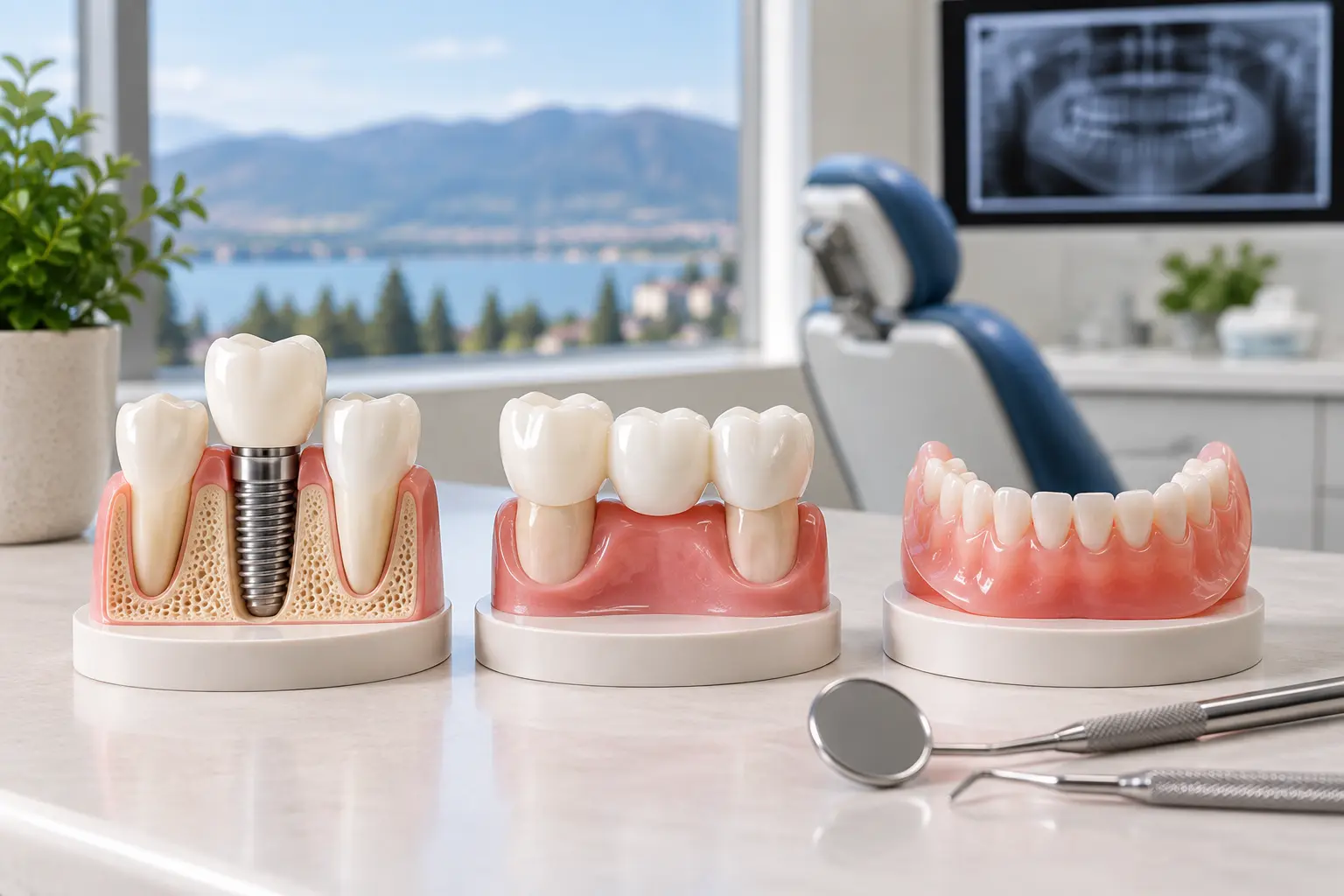
Three main paths exist for replacing a tooth that’s been removed. Each works differently, lasts a different amount of time, affects the surrounding teeth in its own way, and sits at a different price point. The table below puts them side by side across the factors most patients want to understand before sitting down with their dentist.
| Factor | Dental Implant | Dental Bridge | Partial Denture |
|---|---|---|---|
| How it works | A titanium post is placed into the jawbone. After the bone heals around it, a custom crown attaches to the top. | An artificial tooth anchored to the healthy teeth on either side, held in place by crowns cemented over those neighbouring teeth. | A removable frame carrying one or more replacement teeth that clips onto your remaining teeth. |
| Durability | Can last decades with consistent care. The post fuses directly with bone. | Tends to last 10 to 15 years before needing replacement. | Lasts around 5 to 8 years. May need periodic adjustments as the shape of your mouth shifts. |
| Effect on other teeth | Stands independently. No alteration to neighbouring teeth required. | The anchoring teeth on both sides need to be filed down and capped, even if they’re currently healthy. | Clips may place some pressure on neighbouring teeth over time. |
| Jawbone health | Stimulates the bone, slowing the shrinkage that normally follows tooth loss. | No bone stimulation. Gradual shrinkage in the gap area may occur. | No bone stimulation. |
| Timeline | 3 to 6 months total, with most of that being healing time between stages. | Completed across 2 to 3 appointments over a few weeks. | Often fitted within a handful of appointments. |
| Removable | No. Permanently fixed. | No. Permanently fixed. | Yes. Removed for cleaning and sleeping. |
This comparison gives you the broad picture. What your dentist actually recommends will depend on your bone density, the position of the missing tooth in your mouth, and what your budget looks like. For patients who want a deeper look at the financial side, we’ve put together a detailed breakdown of how much dental implants cost in BC, including where the CDCP and private insurance fit into the equation.
Dental Implants in Kelowna and Who They Suit
A dental implant replaces both the root and the crown of a missing tooth. A small titanium post is placed into the jawbone during a minor surgical procedure. Over the following months, the bone grows around the post and locks it in place, a process called osseointegration. Once healed, your dentist attaches a custom-made crown that looks and works the way a natural tooth does.
This is the only missing tooth replacement that actively prevents bone loss in the area where the tooth was lost. The titanium post takes over the role the natural root used to play, keeping the jawbone stimulated and intact.
That said, implants aren’t for everyone. Bone density matters. Patients who’ve had a tooth missing for a long time may have already lost enough bone that a graft is needed before an implant can be placed. Certain medications and health conditions also play a role in how well the bone heals around the post. Digital imaging and, where needed, a 3D scan give your dentist a clear picture of what’s happening beneath the surface, so the recommendation is based on your actual anatomy rather than a guess.
For patients weighing whether an implant is the right call or whether a bridge or removable option makes more sense, we’ve written a separate guide that walks through the dental implant vs bridge vs denture decision in detail, including who should think twice before choosing an implant.
On implant fees in BC
Implant fees vary based on case complexity, whether a bone graft is part of the plan, and the type of crown placed on top. The BCDA publishes an annual suggested fee guide that many BC offices use as a reference point, though dentists set their own fees and your dentist can provide a personalised estimate after a proper assessment.
When a Bridge or Partial Denture Makes More Sense
Implants tend to dominate the conversation, but dental bridges and dentures are solid treatments with decades of clinical history behind them. They suit different patients for different reasons.
A bridge works well when the teeth flanking the gap already have crowns or need crowns for separate reasons. The artificial tooth sits between two anchoring crowns, fills the space permanently, and feels close to natural when you chew. The trade-off is that those anchoring teeth need to be reshaped to accept the crowns, even when they’re structurally sound on their own.
Partial dentures take a different approach. They’re removable, which appeals to patients who prefer taking them out at night and cleaning them separately. They’re also the most budget-friendly way to replace one or several teeth at once. Modern materials have come a long way from the bulky partials of a decade ago. Whether a partial is right for you really comes down to what you value most: cost, convenience, permanence, or long-term bone preservation.
If the budget is tight
Ask about phased treatment plans. Some patients start with a partial denture and transition to implants later once their finances allow.
The Real Cost of Tooth Restoration in BC
Money is part of this decision, and pretending otherwise helps no one. The tooth restoration cost in BC varies depending on which procedure you need, the materials involved, and how complex your particular case is. The BC Dental Association publishes a suggested fee guide each year that gives dentists a reference point, though individual offices set their own pricing and fees aren’t regulated provincially.
| Treatment | Typical BC Range (per tooth) | Covered by CDCP |
|---|---|---|
| Composite filling | $150 to $350 | Yes, for eligible patients |
| Crown (lab-made) | $900 to $1,500 | Yes, with preauthorization and frequency limits |
| CEREC crown (same-day) | $950 to $1,600 | Treated as a crown, subject to the same preauthorization |
| Root canal (molar) | $800 to $1,400 | Yes, for eligible patients |
| Dental implant (post and crown) | $3,000 to $6,000 | No |
| 3-unit bridge | $2,500 to $4,500 | No |
| Partial denture | $800 to $2,500 | Yes, with preauthorization |
These ranges reflect what patients commonly see quoted across Kelowna-area practices. The BCDA suggested fee guide is a useful reference point for individual procedure codes, though dentists set their own fees and your actual number depends on the specifics of your case.
The Canadian Dental Care Plan (CDCP) covers a range of basic and restorative procedures for eligible Canadians. Fillings, root canals, extractions, and dentures are covered, and crowns can be covered with preauthorization. Bridges and dental implants sit outside the program entirely, along with any procedure related to an implant. Your dental office can check whether you qualify and help with the claims paperwork.
Private insurance is another layer. Coverage varies by plan. Some cover half the cost of major work like crowns and bridges, while others cap your annual benefits at a set dollar amount. Bring your insurance details to the consultation so the team can map out what you’ll pay out of pocket before anything starts.
Wondering which treatment fits your situation?
Book a consultation at Discover Dental so we can walk through what makes sense for your mouth and your budget.
or call (778) 477-5554
How to Make the Decision With Your Dentist
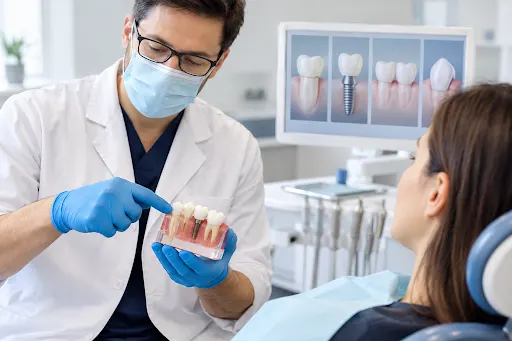
You don’t need to walk into this with a treatment already picked. That’s your dentist’s job, to look at what’s happening inside your mouth, explain what the realistic options are, and help you land on the one that fits your health, your timeline, and your financial situation. At Discover Dental, every treatment conversation starts with a thorough exam, including digital imaging and, when warranted, a 3D scan of the area.
A few questions worth bringing to that appointment:
- Can this tooth be repaired, or does it need to come out?
- What are the realistic options for my specific situation?
- How long does each treatment take from first appointment to finished?
- What will insurance cover, and what do I pay out of pocket?
- What happens to the area over time if I choose not to treat it?
Dr. Corey Hayward, one of the dentists at our Kelowna practice, approaches these conversations with a focus on the whole picture. He sees oral health as connected to overall health, and every recommendation he makes reflects that thinking. For patients who feel nervous about longer or more involved procedures, sedation dentistry is available to make the experience more manageable.
The right treatment is the one that works for your mouth and your life. Nobody else can decide that for you, but a good dentist can lay out the information clearly enough that the choice feels like yours.
Frequently Asked Questions
Can a cracked tooth heal on its own without treatment?
Teeth are not like bones. Once a crack forms, the tooth cannot repair itself. A minor crack might not cause pain right away, but it creates an opening for bacteria to reach the inside of the tooth. Over weeks and months, that crack can extend deeper. Getting it assessed while the crack is still small keeps the treatment simpler and the cost lower.
How do I know whether I need an implant or a crown?
It depends on the root. When the root underneath the tooth is still healthy and there’s enough structure above the gumline, a crown can cap and strengthen what remains. When a tooth cannot be saved, an implant may be recommended if the tooth is extracted or already missing. An implant replaces both the root and the visible portion. Your dentist figures this out.
Does the Canadian Dental Care Plan cover dental implants in BC?
Not at this time. Implants and every procedure tied to an implant, including implant-supported crowns and dentures, sit on the exclusion list. Coverage cannot be reconsidered on those codes. Portions of your overall care that stand on their own, such as the initial exam or diagnostic imaging, may still qualify. Your dental office can walk through the details with your eligibility information.
What is the recovery difference between a dental bridge and an implant?
Bridges involve minimal downtime. You might notice sensitivity around the anchoring teeth for a few days, but most people return to normal eating within the week. Implants involve a surgical step, so expect some swelling and tenderness for a couple of days after the post is placed. The full integration of the post into the bone takes three to six months, though day-to-day life carries on normally during that healing window.
How soon after an extraction can the gap be filled?
Most dentists wait for the socket to heal before placing a permanent replacement, usually somewhere between six weeks and three months depending on the site and whether a graft was placed. A temporary partial can fill the space in the meantime so you’re not walking around with a visible gap. If an implant is the plan, your dentist will scan the area again once healing is complete to confirm there’s enough bone to work with.
What should I do if a filling comes loose at night or on a weekend?
Keep the area clean, stick to soft foods, and avoid chewing on that side. Temporary dental cement from a pharmacy can protect the exposed surface until you’re able to see your dentist in Kelowna the next business day. If the pain is sharp or the area starts swelling, emergency dental care is available and should be the first call.
Related Guides
- Cracked tooth syndrome symptoms and how to tell a harmless craze line from a crack that needs work
- What happens when a cracked tooth goes untreated and how quickly a repair turns into an extraction
- Composite fillings compared with amalgam for patients deciding on material
- Emergency dental care for a tooth that has been knocked out or broken today
- Our Kelowna dental practice and how to book an assessment