It is a very specific kind of dental problem. You feel something crack, take a look in the mirror, maybe notice a little sensitivity, and then decide to wait and see. The tooth is not killing you. It is not visibly falling apart. A few weeks feels like a reasonable window to figure out whether it actually needs attention.
The problem is that cracked teeth do not stay the same while you wait. At Discover Dental in Kelowna, the team sees patients regularly who delayed care on a cracked tooth and ended up needing significantly more treatment than they would have a few weeks earlier.
Why Cracked Teeth Are Deceptive
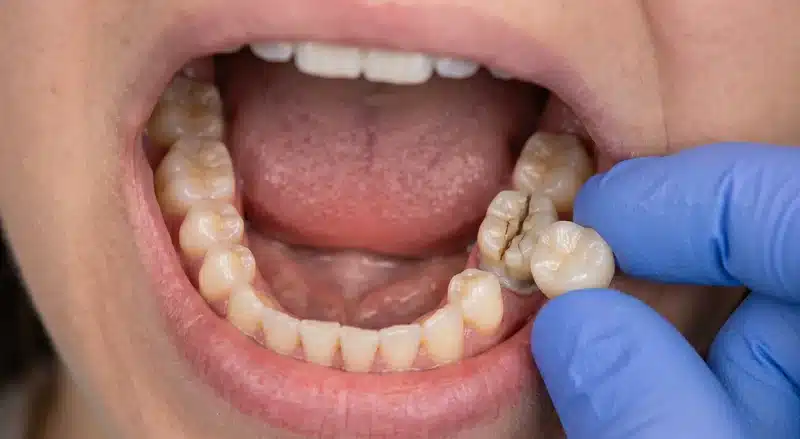
A crack in a tooth does not always announce itself clearly. Some cracks cause immediate sharp pain on biting. Others produce intermittent sensitivity to temperature or pressure that patients dismiss as a normal annoyance. A few produce almost no symptoms at all, at least not at first.
The absence of severe pain is not a signal that the crack is minor. It means the crack has not yet reached the pulp, the inner chamber of the tooth containing nerves and blood vessels. Once it does, the clinical picture changes substantially.
What Actually Happens to a Cracked Tooth Over Time
Teeth flex slightly under the pressure of chewing. Every time you bite down on a cracked tooth, the two sides of the crack flex apart and then snap back together. This mechanical movement is what produces the sharp pain some patients feel when biting. More importantly, it is what makes the crack grow.
A crack that starts in the outer enamel layer can propagate downward through the dentin and, if left long enough, into the pulp. Once the pulp is involved, the nerve becomes inflamed or infected. What started as a crack that could be managed with a crown now requires root canal therapy before the crown can be placed. What started as a minor fracture can progress to a split that runs below the gumline, at which point the tooth may not be salvageable at all.
This is not a slow process. In some cases, particularly when a crack is in a molar under regular chewing load, significant progression can happen within weeks.
The Three Stages of a Cracked Tooth and Why Timing Matters
Stage 1: Crack in Enamel and Dentin, Pulp Intact
At this stage, the nerve is not involved. The tooth is sensitive, possibly painful on biting, but the inner tissue is still healthy. A crown placed at this stage covers and protects the remaining tooth structure, holds the crack together, and stops the flexing that drives propagation. This is the stage where prompt treatment is most straightforward and least costly.
Stage 2: Crack Has Reached the Pulp
Once the crack reaches the pulp, bacteria from the mouth can track down into the nerve tissue. The tooth becomes inflamed or infected. The nerve cannot recover from this on its own. Root canal therapy is needed to remove the infected or inflamed tissue, followed by a crown to restore the tooth. The treatment is more involved and takes longer than a crown alone, but the tooth can still often be saved.
Stage 3: Crack Has Propagated Below the Gumline or Split the Root
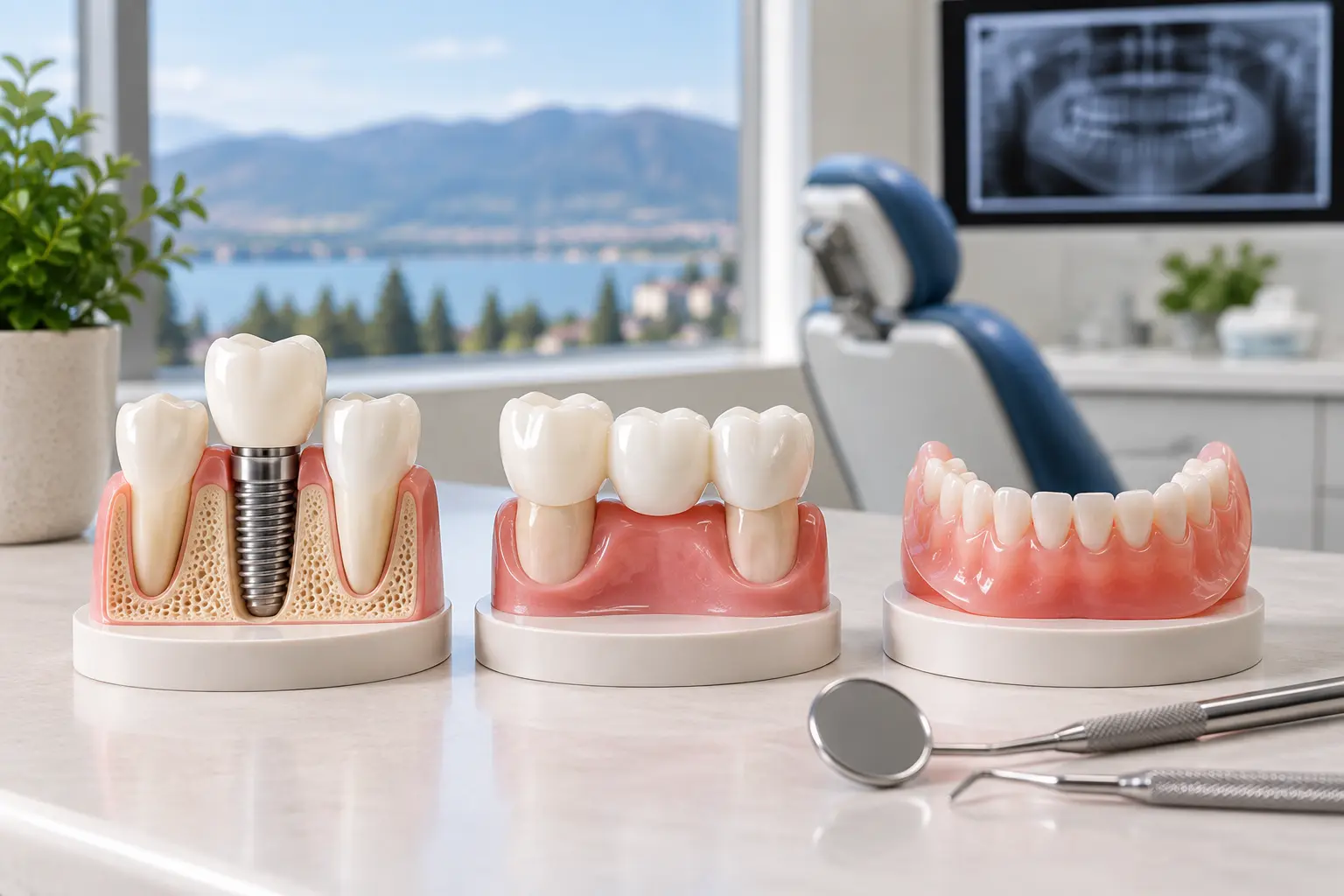
At this stage, the crack has gone further than any restoration can address. The tooth typically needs to be extracted. Depending on the bone and gum tissue remaining, a dental implant in Kelowna may be an option for replacement, but the patient is now managing a significantly more complex and expensive situation than the original crack presented.
The gap between Stage 1 and Stage 3 can sometimes be measured in weeks, not months, for heavily loaded back teeth.
Symptoms That Deserve Prompt Attention
Not every twinge in a tooth is a dental emergency. But certain patterns with a cracked tooth are worth calling the office about promptly rather than watching and waiting:
- Sharp pain when biting down that eases immediately after releasing pressure (a classic crack sign)
- Sensitivity to temperature, particularly cold, that lingers for more than a few seconds
- Intermittent pain that comes and goes without an obvious trigger
- A tooth that was previously sensitive and is now no longer sensitive at all (this can mean the nerve has died)
- Swelling in the gum tissue near the tooth
- A visible line or chip on the tooth surface
If you are experiencing any of these, calling Discover Dental at (778) 477-5554 is the right move.
What Treatment Looks Like at Discover Dental in Kelowna
The first step is an assessment to determine how far the crack has progressed. This includes a clinical examination and digital X-rays to evaluate the tooth and surrounding bone. In some cases, the crack is not visible on X-ray and is identified through clinical testing such as a bite test.
From there, the treatment plan depends on what the assessment shows. A crack confined to the outer tooth structure that has not reached the pulp can typically be managed with a dental crown in Kelowna. Discover Dental offers CEREC one-visit crowns, which means the crown can be designed and placed in a single appointment rather than requiring a temporary crown and a return visit. If the pulp is involved, root canal therapy is completed before the crown is placed.
About the Team at Discover Dental
Discover Dental in Kelowna is a general dental practice with three dentists: Dr. Jeremie Hallett (DMD, University of Saskatchewan), Dr. Natalie Carter (DMD, UBC; GPR, University of Alberta), and Dr. Corey Hayward (DMD, University of Saskatchewan). The clinic offers a full range of general, restorative, and surgical dental services, accepts the Canadian Dental Care Plan (CDCP), and provides direct billing to most insurance plans.
Book an Appointment at Discover Dental
If you have a cracked tooth in Kelowna, do not wait to have it assessed. Call Discover Dental at (778) 477-5554 or request an appointment online.
- Call Discover Dental at (778) 477-5554 to have your cracked tooth assessed by a Kelowna dentist as soon as possible
- Request an appointment online at Discover Dental to find out whether a crown or other treatment is the right approach
- Ask about same-visit CEREC crowns at your appointment with the Discover Dental team in Kelowna