When a tooth becomes damaged or decayed, one of the most common questions patients ask is whether they need a filling or a crown. Both treatments restore function and protect your tooth, but they are designed for different situations.
At Discover Dental, we believe patients should fully understand their treatment options. If you are visiting a dentist in Kelowna and wondering whether a filling is enough or if a crown is the better choice, this guide will help clarify the difference.
What Is a Dental Filling?
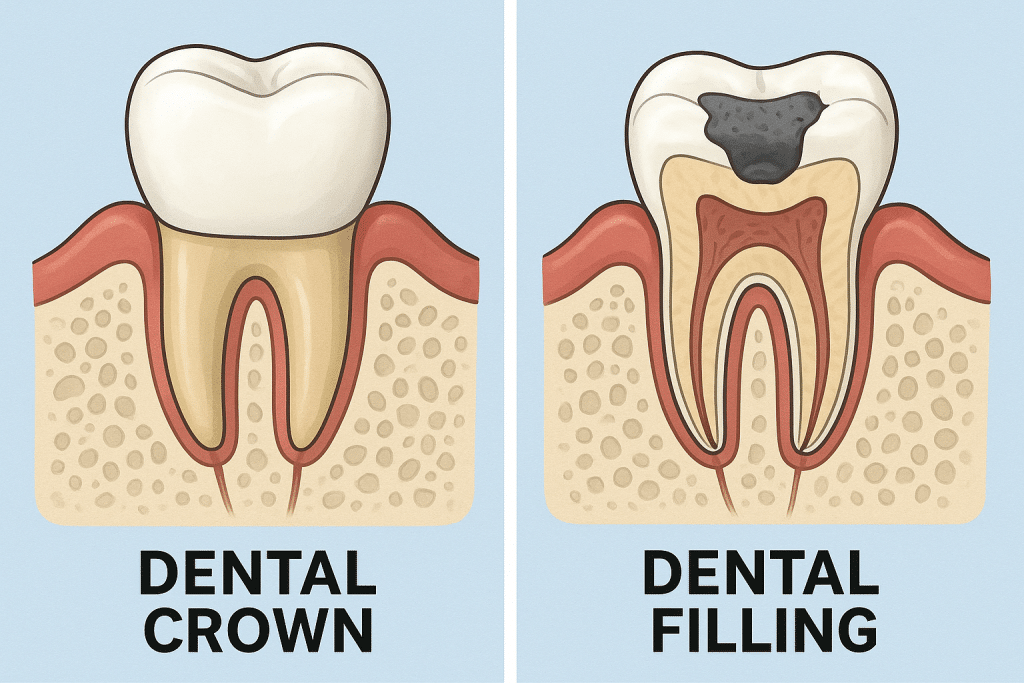
A filling is typically used to repair a tooth affected by mild to moderate decay. After removing the decayed portion of the tooth, the dentist fills the space with a durable material to restore shape and function.
Fillings are ideal when:
- The cavity is small to medium in size
- Most of the natural tooth structure remains intact
- The tooth is not cracked or weakened
- There is no significant structural damage
Fillings are conservative, meaning they preserve as much natural tooth structure as possible.
What Is a Dental Crown?
A dental crown is a custom-made cap that covers the entire visible portion of the tooth. Unlike a filling, which repairs a specific area, a crown reinforces and protects the entire tooth.
Crowns are typically recommended when:
- A large portion of the tooth is damaged
- The tooth has a large or failing filling
- The tooth is cracked or fractured
- A root canal has been performed
- The tooth is severely worn down
A crown provides strength and stability when a filling would not offer enough support.
When a Filling May Not Be Enough
While fillings work well for smaller cavities, they may not be suitable if the tooth structure is significantly compromised.
For example, if decay has removed more than half of the tooth, placing a filling may leave the remaining structure vulnerable to cracking. Large fillings can also weaken the tooth over time, especially under chewing pressure.
In these cases, a crown may provide better long-term protection.
After a Root Canal
Teeth that have undergone root canal treatment are more brittle because the inner pulp has been removed. Although the infection is treated, the tooth often becomes more fragile.
A crown is frequently recommended after a root canal to protect the tooth from fracture and restore full function.
Cracked or Fractured Teeth
A crack in a tooth can worsen if not properly treated. A filling only repairs part of the tooth, while a crown holds the entire structure together.
If you experience:
- Pain when biting
- Sensitivity that lingers
- Visible cracks
- A broken cusp
your dentist may recommend a crown for stability.
Cosmetic Considerations
Crowns can also improve the appearance of teeth that are severely discolored, misshapen, or worn down. While fillings blend well for small repairs, they are not typically used for major cosmetic corrections.
Modern crowns are custom designed to match the shape and shade of your natural teeth, creating a seamless look.
Longevity and Durability
Fillings typically last several years, depending on their size and location. However, larger fillings may need replacement sooner due to wear or breakdown.
Crowns are generally more durable and can last 10 to 15 years or longer with proper care. Because they cover the entire tooth, they provide comprehensive protection against daily stress.
The Impact of Diet on Dental Fillings
Frequent consumption of sugary or acidic foods can weaken the edges of fillings over time, increasing the risk of leakage or recurrent decay.
Maintaining a balanced diet and practicing good oral hygiene helps extend the lifespan of both fillings and crowns.
The Impact of Diet on Dental Fillings plays an important role in their longevity, as consuming excessive sugary or acidic foods can weaken the material over time and increase the risk of decay around the edges.
Is the Procedure Different?
Yes, the procedures differ in complexity.
A filling is typically completed in one visit. The decayed portion is removed, and the material is placed and shaped.
A crown usually requires more preparation. The tooth is reshaped, impressions are taken, and a custom crown is created. In many cases, a temporary crown is placed while the permanent one is being fabricated.
Although crowns require more time and preparation, they provide enhanced protection for compromised teeth.
How Your Dentist Decides
Choosing between a filling and a crown depends on several factors:
- The extent of decay
- The strength of the remaining tooth structure
- Bite pressure in that area
- Your overall oral health
- Long-term durability goals
A thorough examination and digital imaging help determine the most appropriate solution.
Protecting Your Tooth Long Term
When deciding between a filling and a crown, the goal is always to preserve your natural tooth while ensuring it remains strong and functional.
If a filling can safely restore your tooth, it is often the preferred choice. However, if the tooth is significantly weakened, a crown provides the added reinforcement needed to prevent future complications.
If you have concerns about a damaged or decayed tooth, schedule an appointment with a trusted dentist in Kelowna. Discover Dental can evaluate your situation and recommend the most appropriate treatment. To learn more about whether a Dental Crown in Kelowna is right for you, contact our office today and take the next step toward restoring your smile with confidence.